What make a great brand communication strategy ?
Dec 26, 2025
|
5
min read
Have you ever paused and thought about your favourite brand, and it went like, "Why do I like this brand so much?" What is it about them that makes them diverse from the other brands?"
Perhaps it's the way they communicate.
Perhaps it's the atmosphere.
Maybe it's how they always manage to get you.
That's not a coincidence.
It means the brand has done its communication with its target audience correctly.
That's good brand communication.
A great brand communication strategy considers not only what you say, but also how, where, why, and to whom you say it.
Brands that connect with you are those that talk to you on a personal, relatable, and emotionally connected level. They do more than just sell; they communicate, engage, and instil a lasting impression.
What is Brand Communication?
In order to promote perception, connection, and trust, a brand communicates with its audience through a variety of touchpoints. It involves narrative, personality communication, and the creation of connections through varied types of interaction and communications.
A quote that sums up what brand communication is:
“Brand is the holistic sum of customers’ experiences composed of visual, tonal, and behavioural brand components, many of which are shaped by interaction design” - Kate Kaplan.
It means how a brand communicates with the rest of the world—via graphics, messaging, experiences, content, advertisements, public relations, social media, product packaging, and service.
It influences how people perceive and feel about a company before they actually buy anything.
Brand communication is more than just what you say; it's also how you make others feel.
Brand Communication in actions could be :
A campaign tagline
OOH ads that tell a message
Experiential Marketing
Great brand communication is not created by luck; it is the result of a disciplined process that includes strategy, creativity, audience comprehension, and consistent execution.
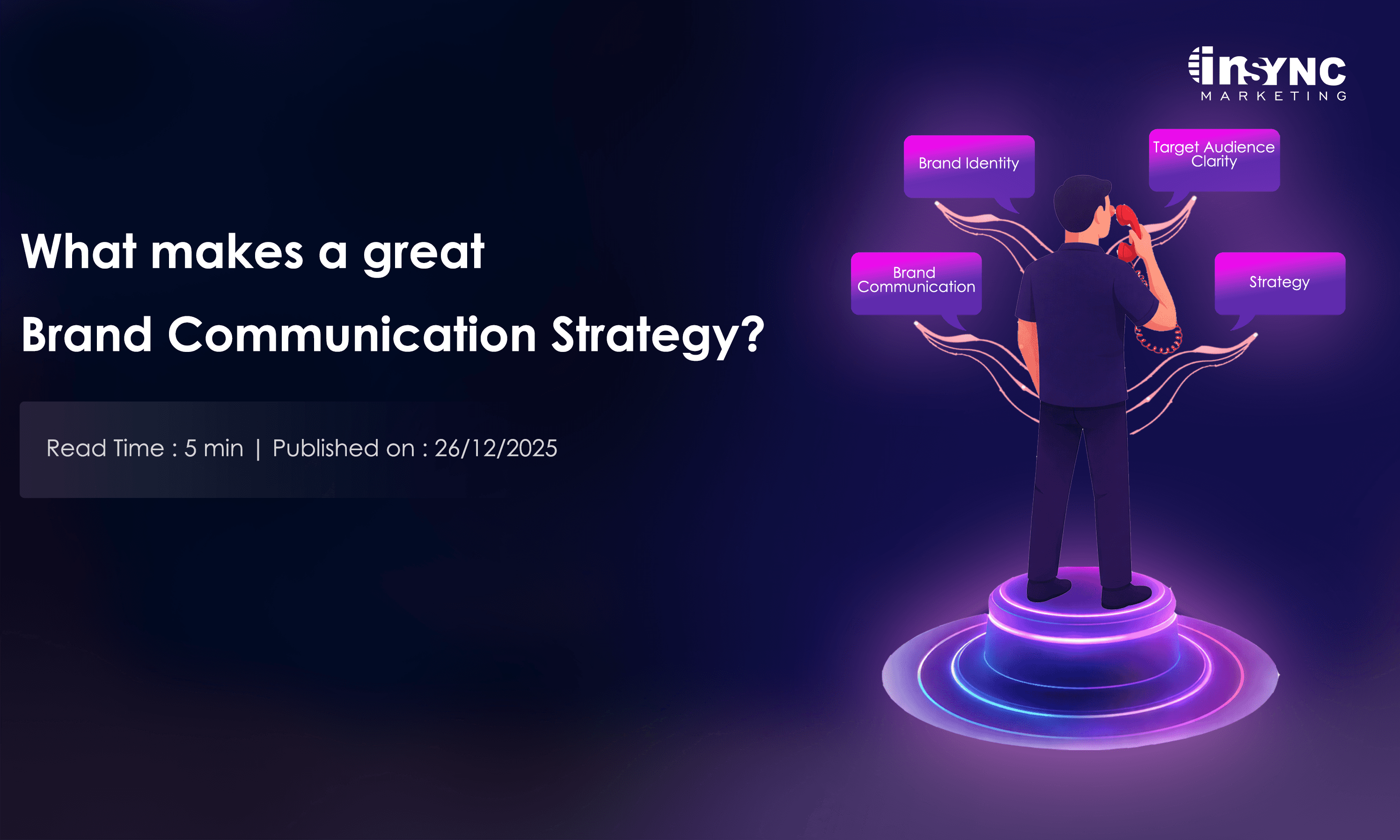
What makes a great brand communication strategy?
Brand Identity
Before engaging, a brand should define its goals, vision, ethics, personality, quality of voice, and competitive positioning.
Concision inside = harmony outside.
Target Audience Clarity
Effective communication requires a thorough grasp of the target audience, including demographics, psychographics, desires, pain areas, digital behaviour, and decision-making influencers. Instead of striving to reach a large audience, effective communication focuses on specific individuals.
TG Clarity = Feels personal and relevant
Core Message
An effective approach develops a clear message structure with a single guiding idea, which is the brand's promise, supporting messages, motives to believe, and proof points such as feedback, results, product strength, and product weakness, resulting in sharp and memorable communication. Brands use a consistent voice that sounds familiar and intentional, matching the brand's personality across all media and establishing trust.
Clear message = brand recall
Storytelling
Great brand communication prioritises emotional connections above facts, employing storylines to elicit emotions like joy and belonging. It emphasises storytelling with a compelling objective, relevant experiences, and a clear point of view, making sure the narrative is relevant to the lives of the consumers. This emotional effect distinguishes brands that promote loyalty from those that are purely transactional.
Storytelling = brand loyalty
Content Consistency
A great brand maintains a consistent tone, colours, messaging, and personality across all channels, spanning digital media, social platforms, advertising, influencer collaborations, public relations engagement, experiential marketing, and internal exchanges. It should deliver a consistent experience across advertising, social media, sites, packaging, communications, promotions, public relations initiatives, retail interactions, and customer service.
Consistency = trust
Creative
Creativity is required for effective brand communication, as are strong visuals such as colours, typography, designs, and graphic styles. It stresses the efficient application of photography and layout concepts, integrates comedy or creativity when necessary, leverages platforms strategically, and considers experiential components beyond just digital interaction.
Creative = memorable
Integrity and Visibility
Inauthenticity poses a significant challenge for brands today. To thrive, brands should adopt strategies focused on open communication, which includes acknowledging mistakes, sharing authentic narratives, avoiding exaggerated claims, and maintaining integrity between words and actions. As consumers grow increasingly sceptical, those who emphasise honesty build trust, while deceitful practices are quickly uncovered. Key traits of authentic communication are genuine relationships, transparency, humility, and alignment between actions and stated goals.
Truth = belief
Multichannel Interaction
People interact with 10-20 interactions per day, and effective communication relies on consistent storylines across channels, platform-specific messages, and timing that matches audience behaviour. A strong brand communication plan ensures a smooth message movement across platforms, targeted material rather than repetition, defined duties for each channel, and consistent communication to support campaigns, introductions, and seasonal interests.
Multiple contacts = recall
Data-Based Measurements
A communication plan combines statistical evaluations, participation indicators, assessment of sentiment, conversion metrics, and ROI tracking. It comprises key performance measures (KPIs) such as awareness of the brand, interaction, sales growth, traffic, return on investment, brand perception, and participation rates to help optimise future communication.
Data Measure = Clear Communication
Trends & Culture Adaptability
To be memorable, brands need to stay relevant, which calls for a dynamic communication approach. This entails keeping an eye on audience changes, changing content formats, innovating across channels, and adjusting to trends and culture. An effective strategy maintains brand identity while constantly changing messaging, embracing new channels, experimenting with formats, modifying tone, and reimagining tales.
Adaptability of culture = brand relevance
In Conclusion:
A great brand communication superpower = clarity + relevance + creativity :
Purpose, accuracy, feelings, transparency, and an audience-first strategy are all components of great brand communication. It makes a brand memorable and relevant by turning it into an experience. A good approach builds trust and emotional bonds by communicating a precise message to a specific audience.