Why Does Brand Need Experiential Marketing?
Dec 26, 2025
|
6
min read
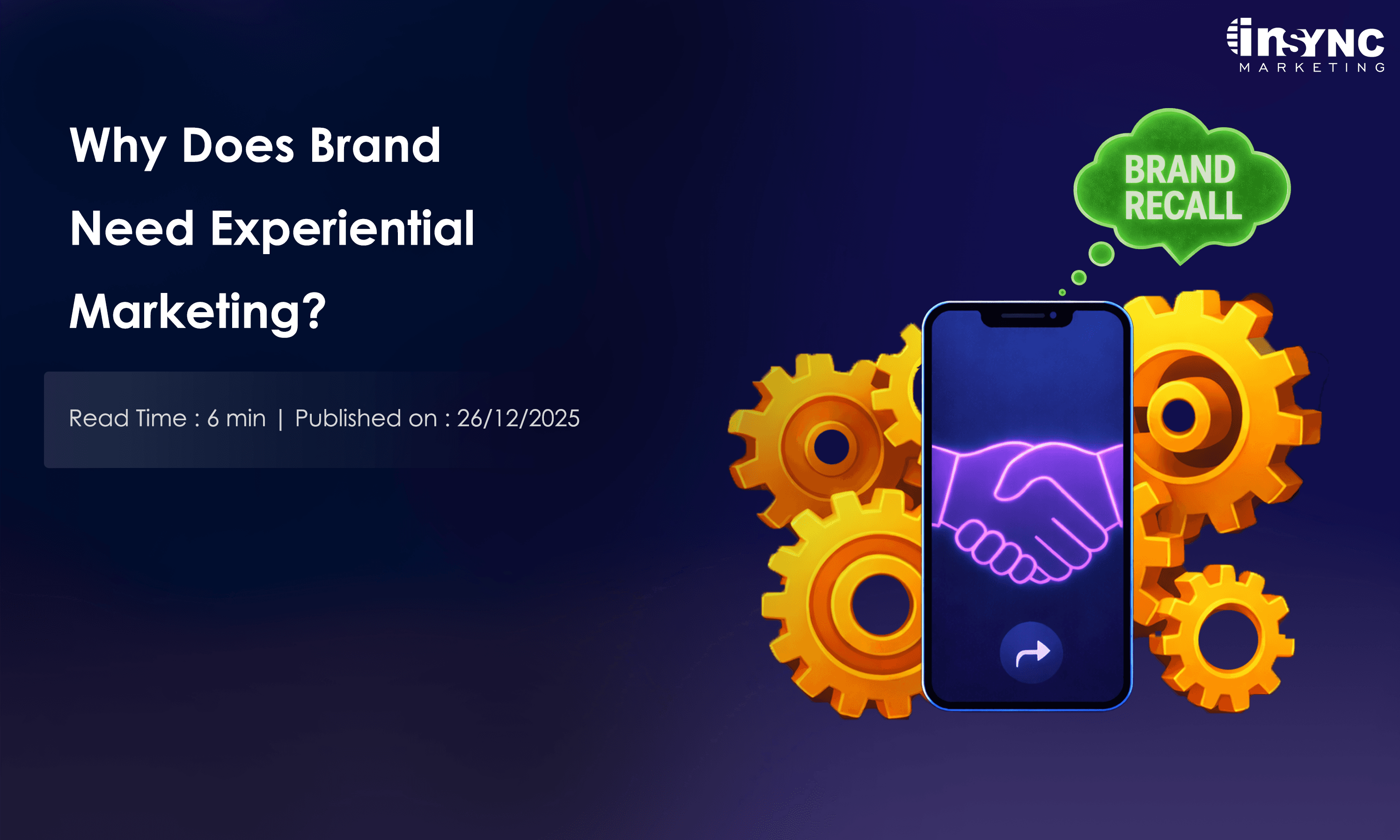
“People will forget what you said, people will forget what you did, but people will never forget how you made them feel.” –Maya Angelou.
In today’s market, brands don't simply sell stuff; they also sell feelings, memories, and emotions.
In the hyper-competitive marketplace, companies battle not only for market share but also for recognition, relevancy, and emotional connection. Every day, audiences see thousands of advertisements, but what they remember most are the ones that struck a chord with them and evoked a strong emotional response.
Campaigns that appeal to consumers on an emotional level rather than a logical one are the most successful. Experiential marketing, characterised by its interactive and physical features, serves as an effective approach for engaging consumers on an emotional level.
For this reason, experiential marketing is becoming one of the most effective strategies used by contemporary firms. It transforms a brand from something you see on your screen into something that you can touch, play, explore, and remember.
As in brand :
Emotions are shaped by experiences, and brands are shaped by emotions.
Experiential marketing is an emotion engine. It transforms brand messaging into actual events that consumers can live, participate in, and enjoy.
Emotions build a memory, and memories generate brand recall. Consumers remember moments more than words, multisensory experiences provide a lasting impression, and interactive settings help consumers remember brands.
Experience makes a brand relatable
Brands may express their individuality through experiential marketing. Whether it’s energetic, adventurous, passionate, eccentric, or bold, experiences transmit tone far better than words. It demonstrates the brand's ethos in reality, it fits with the consumer's lifestyle, it fosters shared experiences and inside quips, and it makes the brand seem like a buddy, not a business.
Unforgettable Moments
Experiential marketing elevates traditional brand encounters by infusing creativity, resulting in better consumer ties. This method converts moments into enduring memories, which spark conversations that turn into social content, increasing reach and influence. For instance, a product trial can be transformed into a sensory trip, a booth into an activity centre, and a store into an adventure. Contrary to traditional marketing, which is passive, experiential marketing is immersive and involves consumers in human interaction. Customers recall the games they played, the challenges they completed, the images they took, the tales they told, and the emotions they felt, all of which contribute to positive brand memory that lasts longer than traditional marketing.
Brand Relatability
Let's be honest: customers prefer brands that feel alive, not corporate.
Experiential marketing enables brands to demonstrate their heritage, tone, and personality in real-world settings, either engaging, energetic, bold, youthful, or upscale.
People interact with brands based on values, emotion, and energy, not features.
Brands can showcase their attributes in captivating ways that appeal to customers through experiential marketing. It offers a sense of pleasure through entertaining games and surprise prizes, engagement through challenges and motion, and participation by giving hands-on experiences in immersive surroundings. It also promotes relatability by showing qualities like adventure, youth, and boldness that fit the consumer's lifestyle and by being present in places that the target demographic genuinely appreciates.
This relatability promotes trust and emotional connection.
Social Media Moments
In this day of Reels and TikTok, consumers share experiences, not ads.
People interact in moments, not messages.
Experiential marketing is naturally viral-ready because it provides consumers with something they want to share.
User-generated material, like friends sharing from photo booths or people participating in entertaining challenges at festivals, is a powerful tactic for expanding reach in the realm of digital marketing. On platforms like Reels and TikTok, video content featuring social interactions with installations—including augmented reality (AR) effects and filters—increases engagement. This type of original material has been demonstrated to outperform traditional advertising approaches, as every individual involved effectively acts as a micro-influencer. Subsequently, posting to social media through these engaging forms enhances brand validity, resulting in a significant increase in organic reach.
People don't remember the ad, but they do remember the experience of being a part of something cool and shareable.
Lasting Memories & Loyalty
The world's strongest brands are founded on memories, not products.
A well-designed experience activation causes:
The essay discusses a variety of feelings and experiences related to competitive sports and group activities. It emphasises the rush of victory, the joy of working with others, and the exhilaration that might come from unexpected results. Furthermore, it emphasises the excitement of competition, the satisfaction of effectively creating or collecting content, and the pleasure of engaging with companies playfully.
These emotional spikes establish a brain imprint, which is a long-term psychological relationship between the moment and the brand.
In conclusion :
Brands require experiential marketing because emotions outlast everything else.
Experiential marketing is not only optional; it’s vital.
It creates brands:
Fun
Excitement
Engagement
Personal Participation
Emotional Depth
Relatable
Share - worthy moments
High brand recall
When individuals leave an activation, they do not reflect on the brand's message.
They consider, "How did the brand make me feel?"